
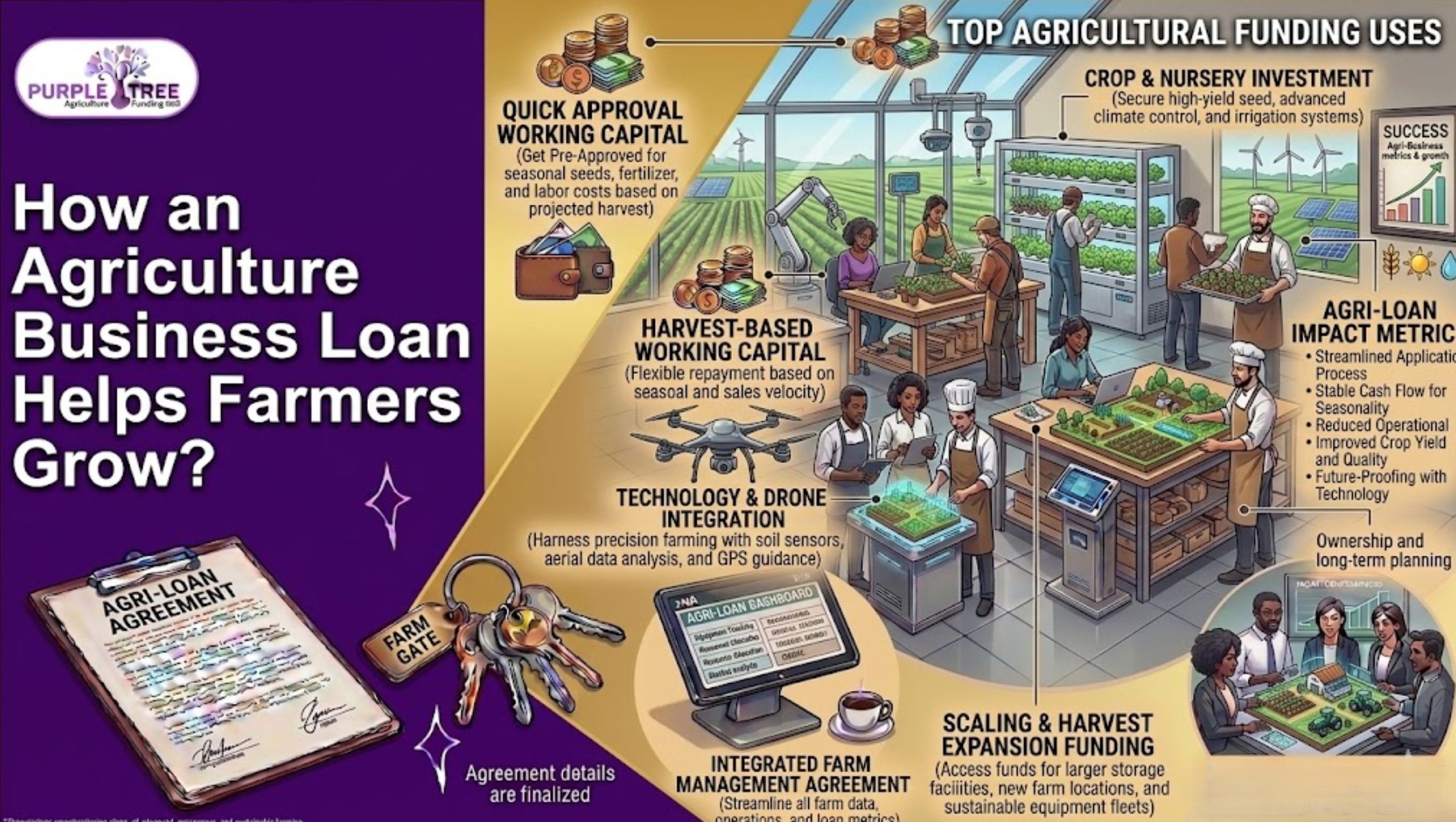
Farming is one of the few businesses where you can work an entire season, do everything right, and still run out of money before the harvest pays out. That timing problem is real, and it's not a personal failure. It's just how agriculture works. An agriculture business loan exists precisely for this gap.
It gives farm owners in states like Texas, Georgia, Iowa, and Florida the capital to act when the season demands it, not six months later when the bank finally calls back.
Why Do So Many Farmers in the U.S. Still Struggle to Access Capital?
Most farm owners don't lack ambition. They lack cash at the right moment. An agriculture business loan solves the timing mismatch between when money goes out and when revenue actually comes in. Farmers operating in seasonal cycles often need funds months before any income arrives.
Traditional banks move slowly and require documents that newer or smaller farm operations simply don't have in order. That leaves many working farms stuck. Some of the most common reasons farmers can't grow even when the land is ready:
- Revenue is seasonal but expenses hit every month regardless.
- Lenders ask for years of tax returns that don't reflect current operations.
- Credit requirements eliminate profitable but asset-heavy farms.
- Approval timelines stretch past planting windows, where every week matters.
- Most bank products weren't designed around how agriculture actually runs.
What Does an Agriculture Business Loan Do for a Growing Farm?
It puts money where the bottleneck is. Whether that's seeds before planting season, a tractor that's been breaking down every third week, or payroll during a stretch when no revenue is coming in yet, the right agriculture business loan removes the one thing holding a farm back.
Here's where that money tends to make the most difference.
Machinery That's Past Its Prime Is Costing More Than a Loan Would
Many farms in the Midwest and Southeast are running equipment that should have been replaced three seasons ago. The repairs pile up. Downtime during harvest costs more than the fix itself. A farm equipment loan lets an operation replace aging machinery on a schedule that makes sense, not after a breakdown forces the issue.
Think about what an older combine costs in lost yield during a two-day repair window in October. That loss often outpaces what the financing would cost. Access to newer machines also affects crop quality, not just the speed of harvest. Some farms in the Carolinas have cut fuel costs by 20 to 30 percent simply by moving from older diesel equipment to newer models.
What tends to get funded through equipment financing:
- Replacement tractors, combines, planters, and specialty harvesters.
- Precision agriculture tools, including GPS-guided field systems.
- Irrigation pumps, storage equipment, and post-harvest processing machinery.
The Stretch Between Planting and Selling Is Where Cash Gets Tight
Ask any row crop farmer in the Corn Belt what April through June feels like financially, and the answer is usually the same. Money is going out fast. Seeds, fertilizer, fuel, and hired labor. And nothing is coming back yet. Farm working capital bridges those stretches so operations don't have to choose between planting enough acres and paying the people who help them do it.
This is not exotic financing. It's just timing. Revenue exists. It's just three to five months away. Getting access to working capital during that window is often what separates a farm that grows year over year from one that just survives. Farmers across Kansas, Nebraska, and Illinois use short-term working capital regularly because it's simply how the business runs.
Where working capital gets used during the season:
- Purchasing seeds, fertilizers, herbicides, and pesticides before planting deadlines.
- Covering labor wages during planting and harvest peaks when headcount spikes.
- Keeping fuel tanks full and delivery logistics running between selling periods.
Operating Costs Don't Stop When the Market Gets Shaky
There's a version of the farm funding problem that doesn't get talked about enough. Sometimes the crops come in fine, but prices drop right at harvest. Or a weather event delays everything by two to three weeks. A farm operating loan handles that scenario. It keeps the lights on, the employees paid, and the operation intact while the market corrects or the season catches up.
This is especially relevant in Florida and the Southeast, where citrus, vegetables, and specialty crops can see dramatic swings in both timing and market price. Having an operating line of credit or short-term capital available means a farm doesn't have to sell at the worst possible moment just to cover overhead. Sometimes holding for even two or three weeks makes a measurable difference in net income.
What a farm operating loan typically covers during volatile stretches:
- Overhead costs such as insurance, utility bills, and land lease payments.
- Debt service payments that can't wait while waiting on crop prices to recover.
- Emergency input purchases when unexpected crop loss requires replanting.
How Do Farmers Know Which Type of Financing Fits Their Situation?
The right fit depends on what the money needs to do and how long it will take the farm to generate revenue to repay it. Not every agricultural business loan works the same way, and lenders who understand seasonal income structures tend to offer products that actually align with farm timelines.
Questions worth asking before applying:
- Is this a one-time purchase, like equipment, or a recurring need, like working capital?
- How many months before your next revenue cycle closes?
- Does the lender offer repayment structures that flex around harvest timing?
- What's the total cost of the capital compared to the cost of not acting?
- Has the lender funded agricultural businesses or farms specifically before?
Final Thoughts
Farming is not a low-effort business, and it never has been. The people running operations across the U.S. are dealing with weather, commodity markets, labor shortages, and input costs simultaneously. An agriculture business loan doesn't fix any of those things. What it does is remove the capital problem from the list. That matters more than it sounds. When farm working capital, farm equipment loan options, and farm operating loan structures are actually accessible, farms can focus on what they do best.
Purple Tree Funding helps small business owners, including agricultural operations, get fast access to capital without weeks of delays. Funding up to $500,000 with same-day decisions and funds moving in as little as 24 hours. No heavy paperwork. No broker fees. Just clear options from a direct lender.
FAQs
How Does an Agriculture Business Loan Differ From a Regular Business Loan?
An agriculture business loan is structured around seasonal income cycles. Repayment terms often flex around harvest timing rather than fixed monthly schedules, which makes it more practical for farm operations.
Can a Small Farm Qualify for Working Capital Funding?
Yes. Lenders like Purple Tree Funding look at monthly revenue and time in business. A farm generating consistent revenue over $20,000 monthly can often qualify even without perfect credit.
What Is Farm Working Capital Typically Used For?
Farm working capital covers the costs that hit before revenue arrives. Seeds, fertilizers, labor during planting season, fuel, and day-to-day operational expenses that can't wait for harvest.
How Fast Can a Farmer Get Approved for an Agriculture Business Loan?
With alternative lenders, approval can happen within two hours. Funds sometimes move the same day. That speed matters when a planting window is closing or equipment needs replacing immediately.
What's the Difference Between a Farm Equipment Loan and a Farm Operating Loan?
A farm equipment loan finances specific machinery purchases. A farm operating loan covers ongoing costs like payroll, supplies, and overhead. Both fall under the broader category of agriculture business financing.